This is a question I get a lot. The "South African guy" is Oscar Pistorius. He is pictured in full flight below.

Most are at least somewhat familiar with the fact that Oscar has been embroiled in a legal battle with the IAAF (track and field governing body) to be allowed to compete at the able-bodied Olympics (perhaps in Beijing this summer).
Yesterday his appeal of an earlier decision was successful. This means that (if he can qualify) his personal Olympic torch was just re-lit. His PB is within a second of the qualifying time necessary. You can read more about the ruling
here.
So, with this huge, landmark decision, and Oscar in the news again I am fielding more questions than ever about the "South African guy". Here is my take:
Firstly, let's be clear about one thing: If I were Oscar I'd be doing the same thing. Of course I'd want to go to the Olympics - duh!
So, with that out of the way, we can move to the academic discussion about whether it's right for the sport and whether he has an "advantage" which are the main points of contention (and the ones I tend to get asked about).
Does Oscar have an "advantage"?
There is no way to know for sure... even for me, using almost the same equipment (though only on my left side.) I would bet that Oscar doesn't truly know for sure either. It's not like he has his own able-bodied times to compare. (Oscar was born with his disability.)
Running prostheses like Oscar's and mine are incredible pieces of equipment. I have often marveled at the fact that it returns my 185 lbs running (which must mean over 370 lbs of force) twice per second for as long as I ask it to. It requires no fuel (my other leg does), it depletes no resources (my other leg does), it doesn't get tired (my other leg does), it doesn't get blisters (my other leg does), it doesn't get injured (my other leg could) there are probably a few more but you get the gist.
On the other hand, it is a separate piece of machinery, a tool. It is not natural and cannot be controlled with as much precision and power; suspension (our word for keeping it attached) can be very tricky and difficult especially under the stress of sprinting. There are also a plethora of other issues for an amputee to deal with starting with the skin and moving up through the muscles and joints. At the end of a long run you want to take it off - like a skier after a day in rental boots.
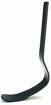
Oscar uses two "Cheetahs" - Flex-Foot sprint legs

I use one Flex-Run - made for distance running
I know that there is no prosthesis that can compare to a natural leg in all-round day-to-day living. There are too many different things we ask of our bodies for one "tool" to do all the jobs well. Imagine trying to play footsie with your girlfriend using the same leg you would use to climb Mount Everest... legs built for these two activities would look and function a lot differently. One would be soft and sensual and one would have sharp crampons...
But let's think about that Everest leg for a second... you could build the crampons in and save the weight of the heavy boot, the foot would never get cold, the foot would also never get tired. The leg and the rest of the body would also be asked to carry a much lighter weight to the top. When a tool is built especially for one task it can be pretty hard to beat. Oscar's legs are made for one thing: Sprinting.
This issue has already come up in the lesser publicized sport of rock climbing... we amputees have been deemed to have an "advantage" in rock climbing. Think about it... if you had to eek your toenail onto a tiny ledge and hold your body weight how long could you do it? A few seconds? I, on the other hand (or foot), could hold it for long enough to let all of my other muscles completely recover, eat a granola bar, apply sun screen, put more white stuff on my hands etc....
So... do I think he has an advantage? No. I know what it is like to learn to walk, learn to run, deal with all the issues. I also know what running was like as a young guy in my early 20s (my accident happened at 21). I know that I don't have an advantage, and I am sure glad I only lost one.... That Oscar can do what he does on two prostheses is absolutely incredible (whether or not there is an advantage) but I don't think there is. The issue is that I can easily see that there could be.
 Is this ruling right for the sport?
I really want to say "yes". Something tells me it isn't though. I believe in fair play and apples vs. apples. I don't like sports with judges, I don't like sports with engines (unless they are all the same, and even then...).
Given that I can see that an advantage could "one day" be possible in theory, can I be sure that today (or last year) wasn't "the day"?
That is why I think the decision is a bit dicey. I like the purity of track sports; everyone competes with the same equipment on the same surface etc. Ahh... "purity" and "track" not words you'll see used in the same sentence very often. Maybe they should be studying if Oscar's blades have an advantage over a sprinter using hgh or steroids....
And My Verdict
If I were the judge I'd let Oscar compete.
This probably sounds a bit contrary to what I've written so far. I think that we should all start with the right to compete. To lose that right I think it is fair that someone be forced to prove that you have an advantage. It isn't enough to say "He's different." After all, way back when, someone might have said, "These Kenyans, they sure seem to win a lot of marathons... they must have an advantage. I'll be damned if we can't figure out what the advantage is, but we sure can't have them competing here." I'm not pulling the race card... just the "kenyans are fast and nobody really knows exactly why" card. If someone could prove that Kenyans have a definite unfair advantage they'd probably have to have their own Kenyan Olympics.... there'd be some great times laid down at the K.O.
Therefore, I think the ruling was absolutely spot on... it included the possibility to be overturned in the future if more info came to light, and it simply said that an "advantage" had not been proved. Essentially, you can't kill the guy's dreams based on a flawed study and nervous suspicion. The burden of proof correctly remains with the IAAF.
That is my opinion. Remember, it's only worth what you paid for it....
Feel free to leave an opinion in the comments.... I'd like to hear your perspective.
 Tweet this!